

Types of Software Testing: Manual, Automated & Hybrid


As software continues to drive innovation and grow complex, companies and quality teams face a big debate : Manual and Automated testing, how can we achieve the perfect balance of efficiency, speed, and accuracy in testing? Should we fully move to Automated testing by integrating internal systems with a No-Code Test Automation platform like Muffins, or should we continue Manual testing? Or should we adopt a Hybrid approach to leverage strengths of both strategically.
1.Evolution of Software Testing: From Manual to Automated and Beyond
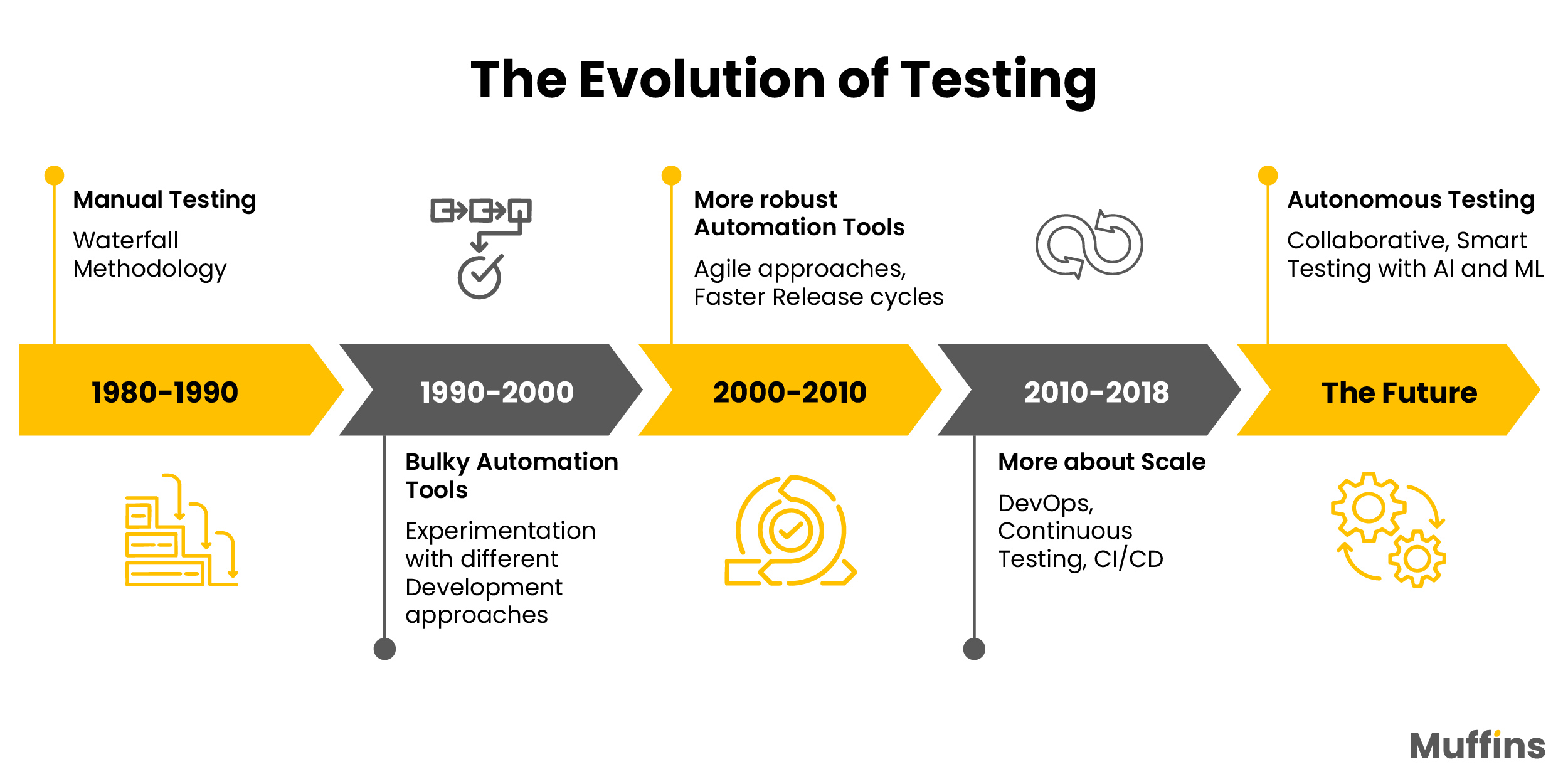
Before diving into the discussion of Manual vs. Automated testing, let’s explore the evolution of testing (see the diagram below). In the early days, software testing was fully a manual process. Testers would manually execute test cases, compare the outcomes with expected, and log defects. They involved with various tasks like requirement analysis, test planning, test case design, test execution and defect logging. As software development grew in complexity and scalability, the limitations of Manual testing became more visible. This has led to the development of Automated testing that uses scripts and tools to handle repetitive tasks more efficiently and reliably.

2.Manual Testing and its key advantages
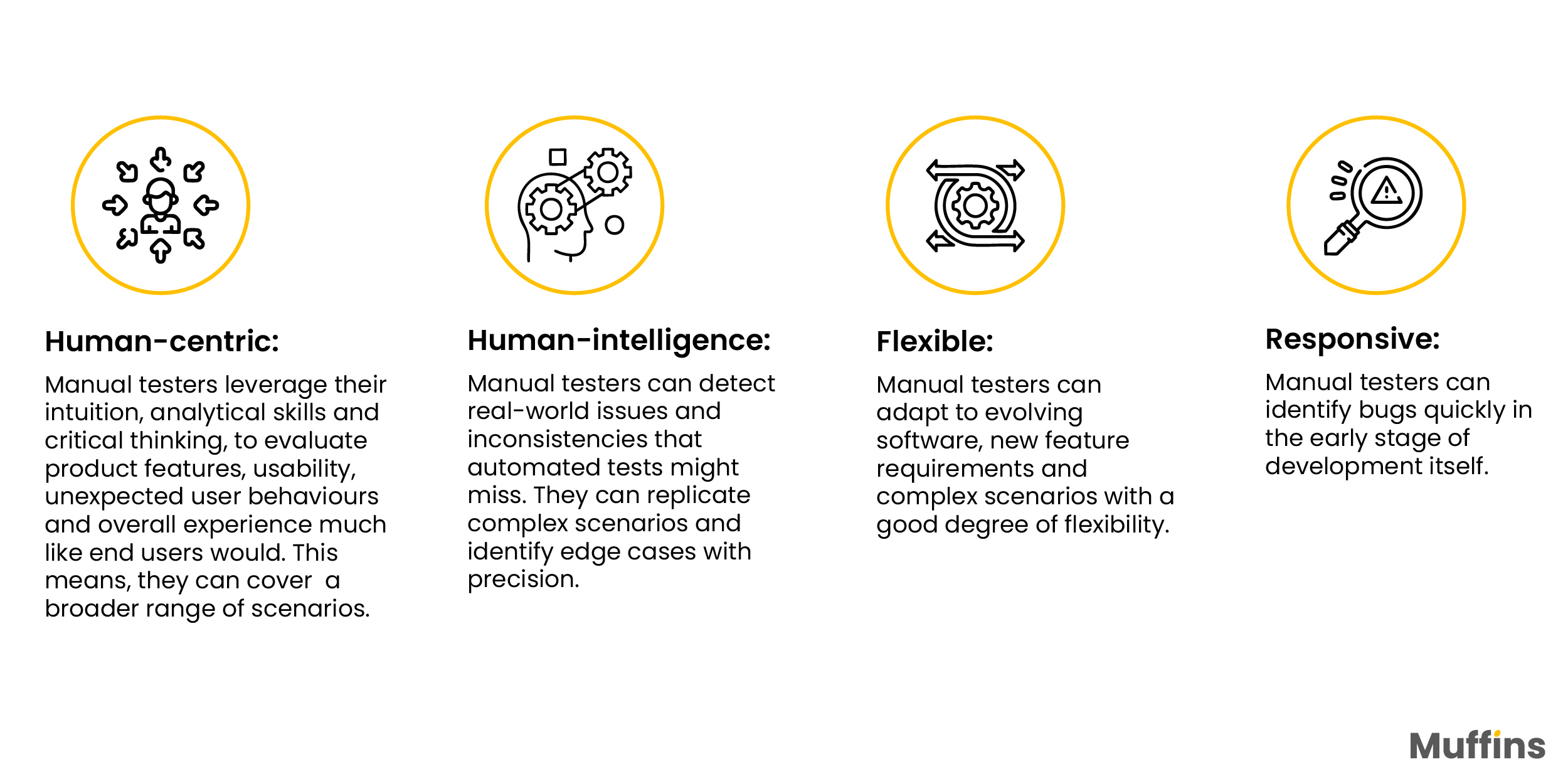
Manual testing involves human testers working directly with software applications to execute test cases and identify defects or issues. It has unique advantages such as human creative thinking, empathy and sensitivity, which are extremely important for specific test scenarios. However, Manual testing struggles keep pace with agile development, where speed, collaboration, iterative cycles and rapid release cycles are the priorities. But it still remains relevant even as the sophisticated low-code and no code automation tools and Generative AI offer higher efficiency.
Despite the rise of advanced low-code & no-code automation tools and sophisticated GenAI offering efficiency and scalability, Manual testing remains relevant. While it is time-consuming, error-prone & difficult to scale, Manual testing brings a higher degree of human-factor. These are crucial for strengthening the testing strategy and ensure thorough validation:

3.Automated Testing and its key advantages
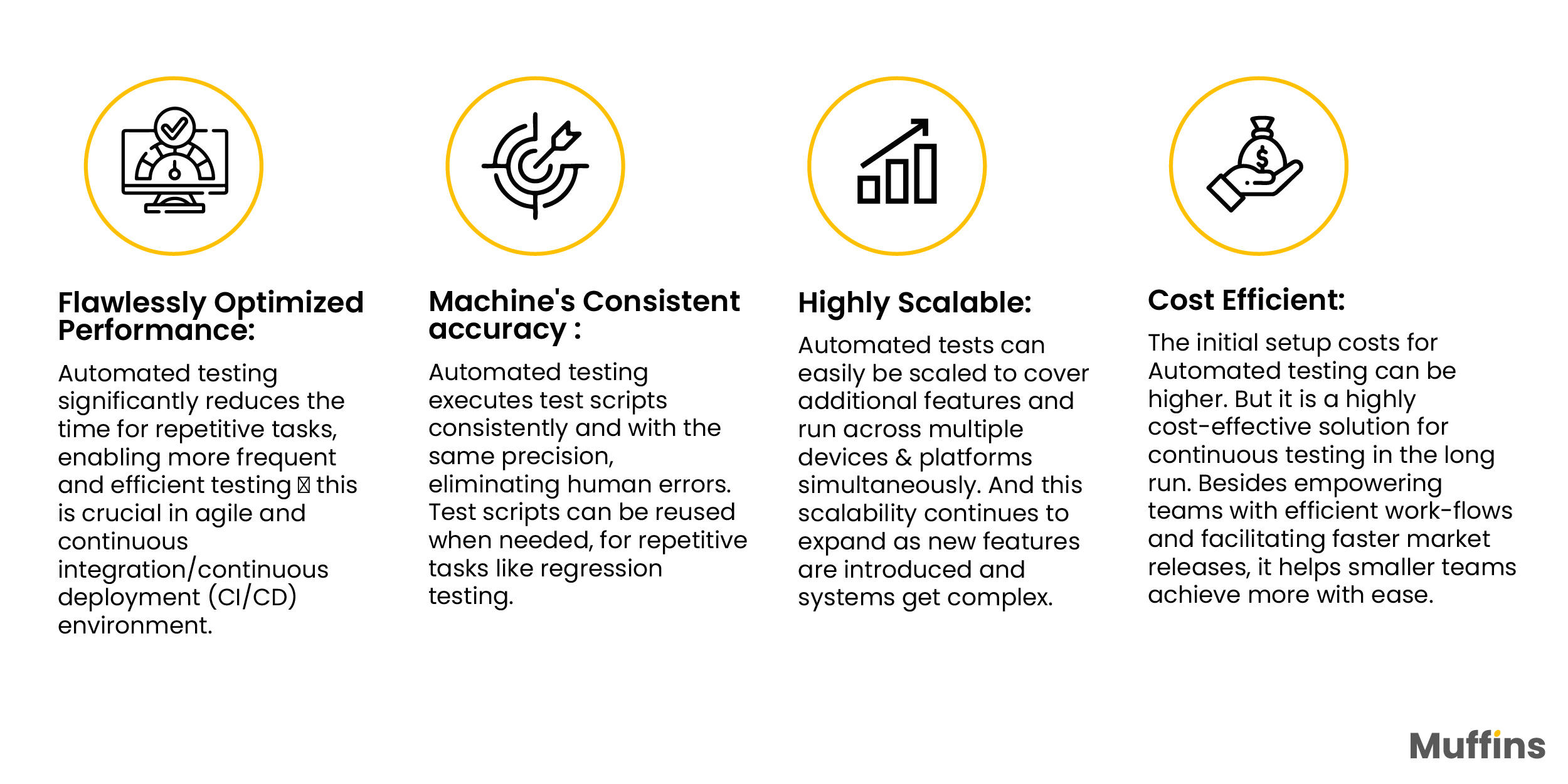
Automated testing is a natural progression from Manual testing. As the industry started exploring different development methodologies such as agile, the need for automation tools to support rapid experimentation and faster market releases became the priority. By using scripts & specialized tools, it brings efficiency, speed, greater control on the quality and accuracy to the software testing process. It significantly reduces the time and effort required for testing, repetitive tasks, and enables seamless integration into agile and DevOps workflows.
With the rise of Low-code, No-code automation tools and AI & ML, Automated testing has become even more efficient and helps teams achieve higher quality standards.

4.Manual vs Automated Testing: Side-by-Side Comparison
Now that we have covered the advantages of Manual and Automated testing, lets take a quick look at how each fare Vs the other on critical testing parameters.
- the disadvantages are in black shaded cells
5.Hybrid Testing & Conclusion
Manual testing and automated testing can work together as strategic partners to deliver software with highly reliable quality. Many organizations, along with a significant portion of the testing community, still value manual testing for its flexibility, adaptability, and the human insights required for complex test cases. In general, wherever human involvement is essential in the SDLC—such as requirements analysis and specialized testing areas—Manual testing remains more effective than Automation.
Automated testing continues to drive speed and consistency, improving efficiency for repetitive and time-consuming tasks like regression and performance testing. AI-powered tools will add a third dimension to this approach, providing valuable data-driven insights.
In conclusion, the shift towards hybrid testing — incorporating manual testing, automation, and AI tools —enables companies to achieve faster execution, higher test coverage, develop high-quality, user-friendly software and release it faster than everyone else.
In the next blog, we will discuss why many organizations are yet to adopt No-Code Test Automation platforms.
Frequently asked questions
Manual testing involves human testers directly working/interacting with the software to execute test cases and find defects, relying on creative thinking and domain expertise. Automated testing uses scripts and specialized tools to perform repetitive tasks - to achieve speed, efficiency, and consistency without human intervention during execution.
Yes, manual testing remains highly relevant. It is essential for scenarios that require human empathy, creativity, and instinct, such as Usability Testing, Ad-hoc Testing, and Exploratory Testing. It is also more effective for complex test cases that need qualitative assessment rather than just quantitative validation.
Performs better in complex test scenarios and identifying edge cases, Reliable for Exploratory testing and detecting smaller issues, Usability and Ad-hoc testing, Functional testing with rapidly changing parameters, User acceptance testing for complex scenarios.
Automated testing is best used for repetitive, high-volume tasks that require consistency and speed. It is ideal for Regression Testing, Load/Performance Testing, API Testing, and scenarios involving multiple platforms. It is a critical component of Agile and DevOps workflows where rapid release cycles are a priority.
Hybrid testing combines the strengths of both manual and automated approaches (often enhanced by AI). It allows teams to use automation for speed and consistency in repetitive tasks while reserving manual testing for complex, human-centric scenarios. This results in faster execution, higher test coverage, and more reliable software quality.
It depends on the timeline. Manual testing has lower initial costs but can become expensive over time due to the continuous need for human resources. Automated testing has a higher initial setup cost (for tools and scripting) but is more economical in the long run for large-scale projects requiring frequent regression testing across multiple cycles.
For repetitive tasks, yes. Automated testing eliminates the risk of human error (like fatigue or oversight) and executes scripts with the exact same precision every time. However, manual testing is often more "accurate" at identifying edge cases and usability issues that a script might not be programmed to catch.
Subscribe today.
More related blogs

Superior Test Designs with Muffins' Intelligent Design Studio
- December 1, 2024

Why Design Thinking Is Essential for Agile Success (Part 1)
- November 29, 2024

Smarter Verification and Object Management for Regulated industries
- September 11, 2025